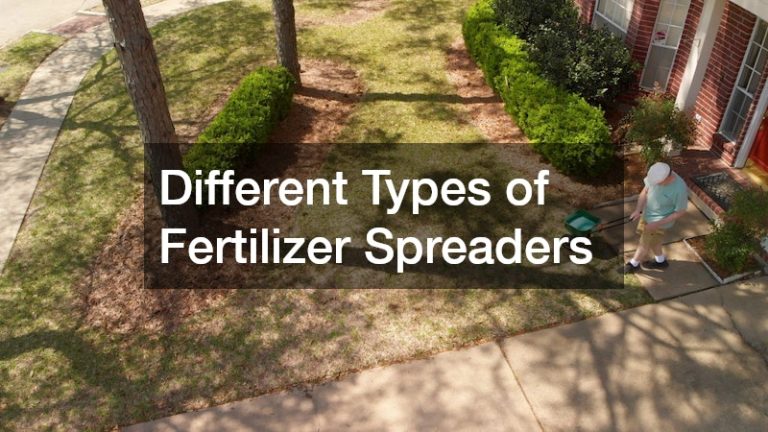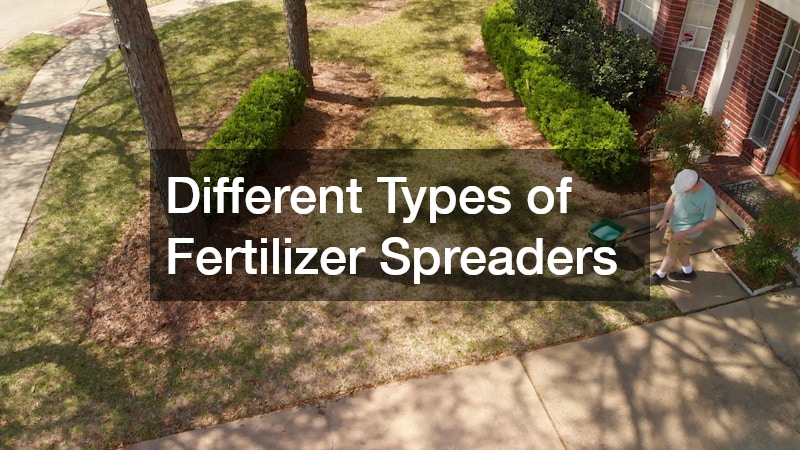
Maintaining a healthy lawn or garden requires the right tools and proper techniques. One of the most important steps in lawn care is applying fertilizer evenly so plants receive the nutrients they need to grow. Fertilizer spreaders are designed to distribute materials like fertilizer, grass seed, or ice melt in a controlled and efficient way. Understanding the different types of fertilizer spreaders can help homeowners and landscapers choose the best tool for their needs and achieve better results.
Broadcast Spreaders
Broadcast spreaders, sometimes called rotary spreaders, are among the most common types used for lawn care. These spreaders distribute fertilizer by dropping it onto a spinning plate that throws the material outward in a wide pattern.
This design allows users to cover large areas quickly and efficiently.
Broadcast spreaders are especially useful for medium to large lawns where speed and coverage are important. They typically have adjustable settings that control how much fertilizer is released, helping users avoid over-application. However, because they spread fertilizer in a wide arc, it is important to use them carefully around flower beds, walkways, or driveways to prevent unwanted distribution.
Drop Spreaders
Drop spreaders offer more precise fertilizer application compared to broadcast models. Instead of spreading material in a wide pattern, they release fertilizer directly below the spreader through a narrow opening. As the user pushes the spreader forward, the fertilizer falls straight onto the ground.
This design makes drop spreaders ideal for smaller lawns, gardens, and areas where accuracy is important. For example, they work well when applying fertilizer near sidewalks, garden beds, or landscaping features where overspreading could cause problems. Although they may take longer to cover a large yard, their precision makes them a popular choice for homeowners who want greater control over fertilizer placement.
Handheld Spreaders
Handheld spreaders are compact and lightweight tools designed for small spaces. They are typically operated by turning a small crank or squeezing a trigger that releases fertilizer or seed through a small opening. Because they are easy to carry and maneuver, handheld spreaders are perfect for spot treatments or very small lawns.
Gardeners often use handheld spreaders for applying fertilizer to flower beds, vegetable gardens, or tight spaces where larger spreaders would be difficult to maneuver. While they are convenient, handheld models are not practical for large areas because they require more time and manual effort to cover significant ground.
Tow-Behind Spreaders
Tow-behind spreaders are designed for larger properties and are typically attached to riding lawn mowers, tractors, or utility vehicles. These spreaders have larger hoppers that can hold more fertilizer, allowing users to cover extensive areas without needing frequent refills.
Because they can distribute fertilizer over large spaces quickly, tow-behind spreaders are commonly used on farms, sports fields, golf courses, and large residential lawns. Many models offer adjustable spread patterns and flow controls, giving users flexibility when applying materials across different types of terrain.
Although tow-behind spreaders are highly efficient for large areas, they may not be suitable for smaller yards due to their size and maneuverability requirements.
Electrical Spreaders
Electrical spreaders have become increasingly popular in recent years because they offer convenience and consistent performance. These spreaders use battery-powered motors to control the distribution of fertilizer, eliminating the need for manual cranking or pushing mechanisms that rely entirely on physical movement.
Electrical spreaders are often designed to be lightweight and easy to operate. With the push of a button, the motor automatically disperses fertilizer at a steady rate, helping ensure even coverage. This consistency can make lawn care tasks faster and less physically demanding, especially for homeowners with medium-sized lawns.
Another advantage of electrical spreaders is the precise control they provide. Many models allow users to adjust spreading speed and flow settings electronically, which can help improve accuracy when applying fertilizer or other materials.
Walk-Behind Spreaders
Walk-behind spreaders combine the convenience of push-style operation with a larger hopper capacity. These spreaders are commonly used by homeowners and landscaping professionals alike. As the user pushes the spreader across the lawn, the wheels activate the spreading mechanism, distributing fertilizer evenly.
Many walk-behind models are available in both broadcast and drop styles, giving users flexibility depending on their needs. They are generally easy to use and provide reliable coverage for most residential properties.
Some modern walk-behind models also integrate electrical spreader technology, offering battery-powered features that improve accuracy and reduce effort. These innovations help ensure that fertilizer is distributed consistently across the lawn.
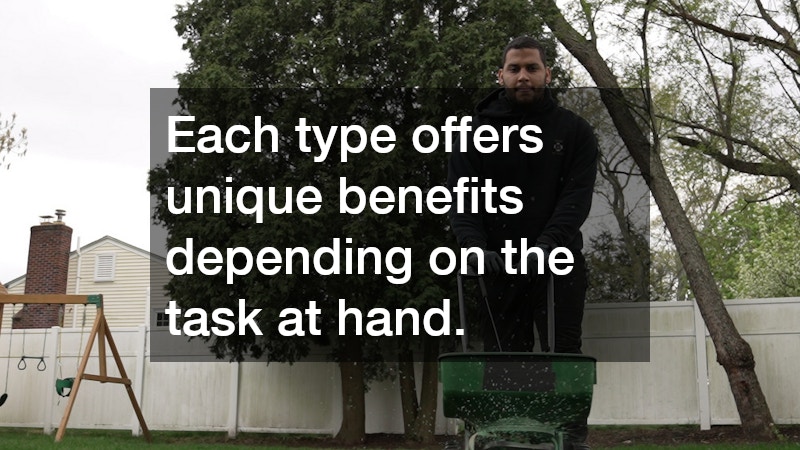
Fertilizer spreaders are essential tools for maintaining healthy lawns and gardens. From handheld models designed for small spaces to tow-behind spreaders capable of covering large properties, each type offers unique benefits depending on the task at hand.
Understanding the differences between broadcast, drop, handheld, tow-behind, and electrical spreaders can help homeowners and landscapers choose the most effective equipment for their needs. With the right spreader and proper technique, fertilizer can be applied evenly and efficiently, promoting strong plant growth and a lush, vibrant lawn.
About the Author